The Lib Dems will announce this afternoon the name of the lucky inheritor of the leadership tankard. All bets are on a narrow Campbell win. Huhne to come a close second.
In the short term, a Campbell leadership will be useful. He is of course someone who is incapable of discussing or arguing domestic policies and he will continue within his comfort zone of banging on about those nasty Americans.
In a classic BBC Daily Politics show this week, he defended Scottish MP's (for he is one) voting on English-only issues by saying that he and his constituents had "friends and relatives in England". That is simply embarrassing.
Under him the Party will drift and be roundly ridiculed. Sadly, however, that is the point. In the medium to long term, this leadership outcome is the worst case. The younger, more ambitious element will see their opportunity slipping away and a year from the next election, they will stage a coup.
With Hughes out of the running, a more threatening challenge will take over. Campbell will simply have kept the seat warm while the younger element sort their lives out and get ready to take over. Campbell will promote all sorts of young MP's into limelight positions in the hope that they raise their profile.
Cameron's assault on the Lib Dems was admirable. He threatened them like never before and provoked this rather tawdry leadership campaign. If Campbell wins, the message to Cameron now is that you have just two years to inflict maximum damage to the Lib Dems, to encourage as many defections as you can and to re-attract many lost voters.
I don't mind admitting that I would have preferred Hughes to have won.
P.S. Huhne is a very nasty piece of work. We are asked to believe that he has seen the light and made a Damascan conversion. I don't think so! Here is a man who made an excessive amount of money in the City in the 80's courtescy of one Mrs Margaret Thatcher; a man who pursued profits, wealth and power where ever he could find it, and now that his wealth is secure, he advocates higher taxes for higher earners. Champagne socialism and hypocrisy of the worst kind.
Thursday, 2 March 2006


Wednesday, 1 March 2006
Introducing the 'Forces Communications Group'
I wrote this article some years ago and tried to get it published while I was still a civil servant. You won't be surprised to hear that I was refused!!
I apologise that it is very long. I am still searching for the button that allows me to split long articles so that only introductory paragraphs appear on the front page from which you determine your interest.
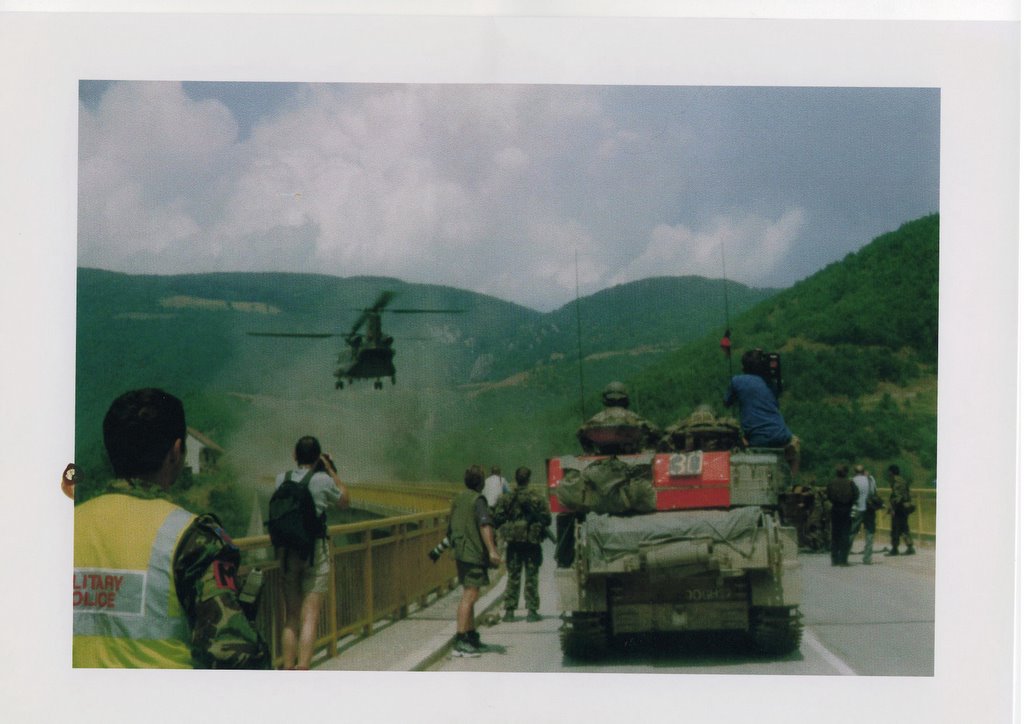
The first section covers the so-far un-told story of the first 24hrs inside Kosovo in June 1999.
I assure you its a good read - if you have time!! Go on, you might enjoy it.
If anyone wants to publish it more widely, just let me know.
Introducing the Forces Communications Group
The marriage of civilian and military media advisers inside the MOD press office has never been easy but as changes to the structure and operation are finally made, Richard Bailey, a former Senior Government Press Officer in Whitehall and former Army Press Officer, puts a new perspective on the problem.
12 June 1999 came to a brief stop for me on the tarmac of Pristina airport surrounded by Russian soldiers, Serbian soldiers, a Company of 1 Para and about 25 highly eminent British journalists (including Kate Adie, Tim Butcher, Michael Evans, Ross Benson, Keith Graves...). We all stood, soaked by a late afternoon downpour, waiting for General Sir Mike Jackson to arrive and proclaim the entry into Kosovo as the complete success that it was. The NATO force had pressed 50 miles into Kosovo in a single day without a shot being fired or a voice raised. The vacuum left by a retreating Serbian Army had been filled before it appeared and even the unexpected appearance of a Russian battalion was to be hailed as a triumph of allied co-operation. General Jackson appeared in his helicopter, stepped out, addressed the waiting media and slipped away to welcome the Russians in private. Priceless PR for a fabulous organisation. But what came next was the most nerve wracking and defining twelve hours of my life.
It was now about half past six in the evening, dusk was falling and as we turned to leave the airport, the plan fell to pieces. The Paras had vanished into thin air, and at that precise moment 4 Army press officers, and 25 journalists, including some instantly recognisable names, were the furthest forward element of the NATO force. But we had no maps, no radios, two vehicles (both media armoured cars), insufficient rations, 4 pistols with a total of 150 rounds of ammunition and no idea where anyone was. We walked quickly but confidently back the way we had come. As we walked through a Russian checkpoint, however, and darkness fell, that confidence fell away and the only Serbian speaker in the group, a journalist, made the crucial decision.
Suddenly veering off the road he marched straight up to the nearest house, rapped on the door and within minutes the occupants were happily walking off into the darkness and we were moving in. Unable to raise anyone on our mobile phones, we settled down for the night, cooked what little food we possessed and chatted nervously about what we would do if either the Serbs or the Russians decided they didn’t want to play General Jackson’s game after all. Two press officers would be on guard during the night - for all the good it would do us. It was as much habit as purpose.
In the morning we rose, washed and shaved (again habit really) and as we gathered together ready to walk further down the road, salvation arrived in the form of a large Army truck. Minutes later we pulled up outside a barrack building where we found our lost Paras sharing a billet with a Company of Serbs. Minutes after that we were back with our Headquarters. No relieved welcome, just the classic British understatement – “Where the bloody hell have you been??!”
I tell that story because it helps to describe the true chaos of military operations and ultimately the sort of challenge that military media relations faces. I have every confidence that during those few hours of uncertainty, our esteemed media colleagues probably thought we were the most useless bunch of press officers in the Army. But of course what I haven’t told you is that none of us were press officers at all – we were just ordinary infantry officers, with little or no training, looking after the media because it had to be done. But these journalists commanded an audience in the UK alone of approaching 20 million people, and would help these people form a life long opinion – Army good or Army bad. I vowed then never to be useless in the eyes of the media again.
Forces media relations is a complex issue tangled in politics and history. In a nutshell, the MOD is the Government Department where the culture gap between the politicians and the civil servants (soldiers, sailors and airmen) is at its widest. Politics thrives in the glare of the media and the public eye. The Forces prefer the shadows and most certainly do not seek any media intrusion. Changes have recently been made to the structure and running of the MOD press office after the most intensive period of British military activity since WW2. The PR changes were driven by politics and now, despite being such great leaders in so many different fields, the military finds itself being led. So the question I wish to address in this essay is solely that concerning the attitude of the modern military towards the media and its public image.
So why then have the politicians been so determined to re-organise the press office? Is this an example of an overbearing Government media machine shifting the goal posts? Well, no, I don’t think so. In actual fact, I believe that such radical steps have been made necessary by decades of military malaise and frankly they were necessary to bring some certainty to the operation. For too long the Forces have ignored public relations and treated it with a mixture of disdain and derision.
I need look no further that my own entry into military media relations for the finest example of that malaise. In 1995, whilst serving with my Regiment in Londonderry, I was summoned to the Commanding Officer’s office to be told that we had to have a press officer while we were in Northern Ireland. Nobody seemed to know what that job actually was, how to do it or how we might measure success. He had to have a name beside the appointment and that name was mine.
It is pure chance that I discovered, to my pleasure, that I was better at PR than I ever had been at soldiering and I had stumbled on a second career just as my first was reaching a ceiling. But across the Army alone there are about 100 officers who are summoned in just the same way and who despise every moment of it, their only thought of a career in tatters. Worse still, neither those doing the appointing nor those being appointed seem able to recognise just how much damage they could do to the reputation of their own beloved employer.
It is only now, of course, that I fully understand PR as a profession in the same way that accountancy or dentistry is a profession. It is a crucial profession that can positively and negatively influence morale, recruiting, budgets, and most importantly public opinion and support. The Army is no less a corporate body with a desperate need to manage its image and reputation than Marks and Spencer or British Gas, but it doesn’t seem to see things that way. The forces have always been troubled by public relations but good communications would help to bring consistency to that age old problem - the forces image and reputation:
“O it's Tommy this, an' Tommy that, an' "Tommy, go away”,
But it's "Thank you, Mister Atkins", when the band begins to play,
The band begins to play, my boys, the band begins to play,
O it's "Thank you, Mister Atkins", when the band begins to play.”
Tommy by Rudyard Kipling
[It hasn’t always been that way. The most famous General of all – Montgomery – understood spin better than anyone. When he arrived in North Africa to tackle Rommel, Montgomery was no better a tactician or strategist than Auchinleck. Montgomery won because he instinctively knew how to make the 8th Army a corporate brand whose soldiers felt proud to serve. Communication, image, reputation were his key weapons in convincing his men that they could fight together and win, and he created an Army that was so well PR’ed that it remains one of the most recognisable military brands in the world – The Desert Rats.]
The Army has seen sense in relation to so many professions over the years. The establishment of the Royal Army Medical Corp in 1860 underlined the understanding that doctors best serve their soldiers when they are an integrated and respected part of the service. Unless you understand military life and are a part of it, you cannot hope to get the balance of humanity and ruthlessness right. Few soldiers can pull the wool over an Army doctor and most Army doctors can maintain a fit and healthy battalion. The same principle applies to engineering, mechanics, dentists, vets, cooks and musicians. No Commanding Officer would ever summon an Officer and expect him to fix the Land Rovers or the guard dogs. In every case there is an established Army Corp appropriately distributed around the Service, so that the right jobs are done by the right professionals. Commanding Officers may be able to tell the mechanics which vehicles to fix but they do not tell them how to fix them. The very best example is the Army Legal Service (ALS). Here is a group of 100 or so Army lawyers spread around the various Headquarters employed to ensure that military law is applied properly and fairly but with a full understanding of the military context. One and all are professionals first, soldiers second but able to perform under the highest pressure and in the most difficult of circumstances with the full respect of their infantry or artillery colleagues because they walk the walk and live the life.
I imagine you have worked out where this is leading. So, yes, if all of these are respected professions which have been formally integrated into the Forces, why not Communications? How can the Forces be persuaded to respect and understand public relations? How can this gulf of distrust between civilian and military be bridged? Why is there no uniformed, trained and respected professional in each Regiment capable of ensuring that the reputation of that unit is properly maintained? I spent the hours of 12 June 1999 prior to arriving at Pristina airport at the head of a 2000 vehicle convoy dealing with the only element of the plan which no-one had mentioned or considered – the saturation of this tiny road into Kosovo with media. Every time we stopped at a Serb check point, I alone had to keep at least 10 cameras and twice as many journalists away from the Brigadier as he negotiated free passage. I alone had to marshal the eyes of the world safely and professionally without training or direction. (Best day of my life!)
I believe that the MOD must immediately create a new tri-service unit for professional communicators. They must be professionals first and soldiers, sailors and airmen second. The Unit must have the simultaneous respect of the Services, the media and the communications profession. It is a tall order but eminently achievable. Its planning and media management on operations would be an attribute to commanders and it would represent and stand up for the needs and demands of good communications in everything the Forces do. It would recruit young people with a lust for life and adventure and with a little proven experience in the communication industry. Volunteers would be trained in military skills and professional skills before being fully integrated into the Forces. Just like the Doctors, Dentists, lawyers, vets and chaplains, they would then work, live and play with the forces they serve but with one foot firmly anchored in the real world they communicate with. It can be done and would prove an exciting, challenging prospect for any motivated young communications professional. Step forward volunteers for the Forces Communication Group.
Richard Bailey was a Senior Press Officer in Whitehall. After an 8 year commission in The Highlanders, culminating in Kosovo, Richard managed the media operation for the Lockerbie Trial in the Netherlands in 2000, worked as press officer at Conservative Central Office during the 2001 General Election, was Head of Media at the Country Land and Business Association, and handled the media operations for the Hutton Inquiry and the Soham Trial.
He is pretty sure he has not been “useless” to the media for some considerable time!
Numa Numa
Caught this on Channel Four over the weekend. Finally found a link to it. Watch and enjoy.
He is miming, of course, and how brilliantly.
I often get carried away listening to my favourite catchy tunes, so I'm with this guy all the way!
He is miming, of course, and how brilliantly.
I often get carried away listening to my favourite catchy tunes, so I'm with this guy all the way!
Values
David Cameron has published our values document. At his London launch, he did what he does best - he stood on his feet and spoke from the heart about what it is that drives him, his leadership and a Party that wants to change. He exposes the nerve of our current interfering, regulating, banning, telling, bossing government. He explains how it can be different and where we are going.
Watch it here.
You can't do this if you are shallow and directionless. You build the ship, you launch it, you set the course and then you explain what happens on each deck.
Watch it here.
You can't do this if you are shallow and directionless. You build the ship, you launch it, you set the course and then you explain what happens on each deck.
Monday, 20 February 2006
Thin Ice
I have been and remain transfixed by the Olympic Curling competition. Emotions have run high over the past few days as the men's team have edged into the semis and now the ladies have edged out.
Unlike many sports, my admiration for this one predominantly reflects a knowledge that I would be hopeless at doing it. The margins between success and failure are breath-taking in their minutiae.
Like many sports, however, the influence of leadership, decisiveness and confidence on the outcome is huge. And that, in a nutshell, has been the difference between our two teams.
The men are confidently lead, heads never drop, and commitment is wholehearted. They look like winners and I suspect they will be.
Sadly, only the converse can be said of the Ladies team. The body language among the team has told you all you need to know about how they were feeling and interacting. It just didn't happen.
That the teams have been selected purely on individual merit for the first time is an important and bold step. It marks a significant step forward in our ambitions. That is good.
What is bad is that the management have failed to accept the responsibility that goes with such a policy.
I have no right to make this observation and it is a little harsh but, with four games to go, and with a serious chance of the semis remaining, Rhona Martin's psychological state was clearly the weak link in the team. She may have been the skipper and the reigning Olympic champion but it was causing divisiveness and a complete breakdown of confidence. The team needed to breathe and she should have been rested.
Go, boys. 'Take out' those Fins.
Unlike many sports, my admiration for this one predominantly reflects a knowledge that I would be hopeless at doing it. The margins between success and failure are breath-taking in their minutiae.
Like many sports, however, the influence of leadership, decisiveness and confidence on the outcome is huge. And that, in a nutshell, has been the difference between our two teams.
The men are confidently lead, heads never drop, and commitment is wholehearted. They look like winners and I suspect they will be.
Sadly, only the converse can be said of the Ladies team. The body language among the team has told you all you need to know about how they were feeling and interacting. It just didn't happen.
That the teams have been selected purely on individual merit for the first time is an important and bold step. It marks a significant step forward in our ambitions. That is good.
What is bad is that the management have failed to accept the responsibility that goes with such a policy.
I have no right to make this observation and it is a little harsh but, with four games to go, and with a serious chance of the semis remaining, Rhona Martin's psychological state was clearly the weak link in the team. She may have been the skipper and the reigning Olympic champion but it was causing divisiveness and a complete breakdown of confidence. The team needed to breathe and she should have been rested.
Go, boys. 'Take out' those Fins.
Wednesday, 8 February 2006
Spring is in the air
A propos pretty much nothing really ...
I just thought I would observe that the snowdrops are blooming in the garden, the sun is shining, the morning air was cool and fresh, January is over, Spring is finally here, the year holds much promise and I am having an Abba moment at my desk.
That is all.
I just thought I would observe that the snowdrops are blooming in the garden, the sun is shining, the morning air was cool and fresh, January is over, Spring is finally here, the year holds much promise and I am having an Abba moment at my desk.
That is all.
Tuesday, 7 February 2006
Very brave, Minister
The exchange between Tim Yeo and Tony Blair at the Commons Liaison Committee this morning was surreal in the extreme.
Tim Yeo, experienced campaigner, went for the PM over his Government's Climate Change inadequacies. The Tories are very big on environment and climate change now and it is fertile electoral ground.
That is, up to the point where you suggest that the public should be told that their days of cheap flights and exotic travel are over.
The PM sidestepped Tim's lure into that particular trap and Mr Blair fought bravely against the temptation to ask whether the Tories might be fighting the next election with a pledge to put flight costs through the roof.
It would be a brave politician indeed who went to the polls with a pledge to end cheap flights to Bordeaux, Ibiza and Lesbos. No votes in it, see! No matter how right the policy would clearly prove to be.
Tim Yeo, experienced campaigner, went for the PM over his Government's Climate Change inadequacies. The Tories are very big on environment and climate change now and it is fertile electoral ground.
That is, up to the point where you suggest that the public should be told that their days of cheap flights and exotic travel are over.
The PM sidestepped Tim's lure into that particular trap and Mr Blair fought bravely against the temptation to ask whether the Tories might be fighting the next election with a pledge to put flight costs through the roof.
It would be a brave politician indeed who went to the polls with a pledge to end cheap flights to Bordeaux, Ibiza and Lesbos. No votes in it, see! No matter how right the policy would clearly prove to be.
Spot the difference
[Also published on Once More.com]
Lets play a game! I am going to relate two stories about our beloved police force and I’d like you to tell me what the difference is between them. Here goes.
Story One.
In my village in rural Cambs, an unscrupulous gang of block pavers are in operation.
One day last week they called upon an elderly gentleman requesting the chance to quote him happy on a new driveway.
His driveway is old, so he accepts their offer – for a quote.
Botchit and Scarper then proceed to physically dig up his driveway thus trapping his only vehicle in his garage and compelling the gentleman to spend his way out of the problem, ideally with them.
Elderly gentleman is not so easily intimidated and calls for help.
Police arrive.
Police investigate. Botchit and Scarper say elderly gentleman asked them to dig up his driveway. Elderly gentleman says Botchit and Scarper are doing so without his consent and thus creating a case of criminal damage.
Police conclude that it is his word against theirs.
Police action – Do absolutely nothing and drive away.
Story Two.
European newspaper editor lacks taste and publishes unfunny cartoons of Mohammed dressed as a terrorist.
Muslims in Middle East take offence and start angry demonstrations.
Other European newspaper editors claim freedom of speech and expression and repeat the publication of these unfunny cartoons. Daily Mail asleep! (Only way to explain why they didn’t join in!)
Middle East explodes in a furore of angry demonstrations and set fire to symbols of the offending European countries.
Muslims in Britain decide to share the offence taken by their Middle Eastern brethren and take to the streets of London.
Quite astonishingly, Muslim participants from Luton, Bedford, London etc commit gross acts of criminal incitement directly in front of our police force by carrying banners calling for all manner of terrorist acts of murder to be wrought on innocent people.
Police observe. Police action – Do absolutely nothing and successfully complete shift with no extra paperwork to do.
The answer of course is that the difference is nothing more than the SCALE of police failure.
In the eighties when I was growing up, I watched our police battle bravely against miners, football hooligans, and all manner of civil unrest in the name of law and order. The police were revered and trusted and stood tall against violence, wrong doing and intimidation. One grew up with a clear understanding that if you nothing to hide, the police were on your side and would protect you, and that if you were up to no good, the police would leap on you from a great height.
Now in 2006, the police are spineless and toothless and society has adapted in their shadow. How did we get to this sorry situation?
Let me make a few suggestions:
Our leaders forget that society takes its lead from them and quickly reflects the attitudes displayed by them. Hence, when you commission the Macpherson report in your first year of office and systematically and intentionally trash the police force simply to demonstrate that you are going to squash the old Tory vanguard, society reads, “Police are shit, police are powerless – ignore them.”
When you pass a gold plated Human Rights Act, society reads, “Cool, we can do exactly as we please and if challenged just scream “Human Rights” and everyone will run away.”
When you operate a prison policy that releases as many criminals as you can to save money, the criminal fringe read, “Make hay while the sun shines, boys. So long as you don’t actually kill anyone, they won’t lock you up.”
I could go on and on and on and on….. Quite simply, we have a system of Government which is lead by the rights and concerns of the criminal rather than the victim. A system of Government which fights crime on the basis that it is better for 10 guilty men to go free, than for 1 innocent man to be incarcerated.
Law and Order is NOT political. It is purely common sense founded in a basic understanding of group dynamics and human psychology. In order to keep the lid on decency and order, you have to be prepared to hold it down firmly and accept that a few people will get trapped along the rim. The alternative is what we have now – that you release the lid and millions of people feel threatened, insecure, unsafe, unprotected, vulnerable and deserted.
Our police are letting us all down at the moment. But it is not the fault of the bobbies and sergeants. They know what should be done and would do it in a trice if they could. No. The blame lies entirely with this crass and inept Government and the lickspittle poodles they place at the helm of the force.
You may think that my closing words lower the tone of this debate, but it really isn’t that far a jump to replace my elderly gentleman’s block paving incident with the rape of a young lady in a quiet back street and realise that, disregarding for a moment the offence of public indecency, the Police COULD conclude and act in exactly the same way.
How bleeping frightening does it get!
Lets play a game! I am going to relate two stories about our beloved police force and I’d like you to tell me what the difference is between them. Here goes.
Story One.
In my village in rural Cambs, an unscrupulous gang of block pavers are in operation.
One day last week they called upon an elderly gentleman requesting the chance to quote him happy on a new driveway.
His driveway is old, so he accepts their offer – for a quote.
Botchit and Scarper then proceed to physically dig up his driveway thus trapping his only vehicle in his garage and compelling the gentleman to spend his way out of the problem, ideally with them.
Elderly gentleman is not so easily intimidated and calls for help.
Police arrive.
Police investigate. Botchit and Scarper say elderly gentleman asked them to dig up his driveway. Elderly gentleman says Botchit and Scarper are doing so without his consent and thus creating a case of criminal damage.
Police conclude that it is his word against theirs.
Police action – Do absolutely nothing and drive away.
Story Two.
European newspaper editor lacks taste and publishes unfunny cartoons of Mohammed dressed as a terrorist.
Muslims in Middle East take offence and start angry demonstrations.
Other European newspaper editors claim freedom of speech and expression and repeat the publication of these unfunny cartoons. Daily Mail asleep! (Only way to explain why they didn’t join in!)
Middle East explodes in a furore of angry demonstrations and set fire to symbols of the offending European countries.
Muslims in Britain decide to share the offence taken by their Middle Eastern brethren and take to the streets of London.
Quite astonishingly, Muslim participants from Luton, Bedford, London etc commit gross acts of criminal incitement directly in front of our police force by carrying banners calling for all manner of terrorist acts of murder to be wrought on innocent people.
Police observe. Police action – Do absolutely nothing and successfully complete shift with no extra paperwork to do.
The answer of course is that the difference is nothing more than the SCALE of police failure.
In the eighties when I was growing up, I watched our police battle bravely against miners, football hooligans, and all manner of civil unrest in the name of law and order. The police were revered and trusted and stood tall against violence, wrong doing and intimidation. One grew up with a clear understanding that if you nothing to hide, the police were on your side and would protect you, and that if you were up to no good, the police would leap on you from a great height.
Now in 2006, the police are spineless and toothless and society has adapted in their shadow. How did we get to this sorry situation?
Let me make a few suggestions:
Our leaders forget that society takes its lead from them and quickly reflects the attitudes displayed by them. Hence, when you commission the Macpherson report in your first year of office and systematically and intentionally trash the police force simply to demonstrate that you are going to squash the old Tory vanguard, society reads, “Police are shit, police are powerless – ignore them.”
When you pass a gold plated Human Rights Act, society reads, “Cool, we can do exactly as we please and if challenged just scream “Human Rights” and everyone will run away.”
When you operate a prison policy that releases as many criminals as you can to save money, the criminal fringe read, “Make hay while the sun shines, boys. So long as you don’t actually kill anyone, they won’t lock you up.”
I could go on and on and on and on….. Quite simply, we have a system of Government which is lead by the rights and concerns of the criminal rather than the victim. A system of Government which fights crime on the basis that it is better for 10 guilty men to go free, than for 1 innocent man to be incarcerated.
Law and Order is NOT political. It is purely common sense founded in a basic understanding of group dynamics and human psychology. In order to keep the lid on decency and order, you have to be prepared to hold it down firmly and accept that a few people will get trapped along the rim. The alternative is what we have now – that you release the lid and millions of people feel threatened, insecure, unsafe, unprotected, vulnerable and deserted.
Our police are letting us all down at the moment. But it is not the fault of the bobbies and sergeants. They know what should be done and would do it in a trice if they could. No. The blame lies entirely with this crass and inept Government and the lickspittle poodles they place at the helm of the force.
You may think that my closing words lower the tone of this debate, but it really isn’t that far a jump to replace my elderly gentleman’s block paving incident with the rape of a young lady in a quiet back street and realise that, disregarding for a moment the offence of public indecency, the Police COULD conclude and act in exactly the same way.
How bleeping frightening does it get!
Thursday, 2 February 2006
SEX politics SEX
See got your attention - just as Cameron apparently has your attention too, ladies!
Sky News excel themselves. Not only do they report on Cameron's inclusion in the Top 100 sexy men, but they compare all the others to him!
Sky News excel themselves. Not only do they report on Cameron's inclusion in the Top 100 sexy men, but they compare all the others to him!
Wednesday, 1 February 2006
Winding Down?
That is now the second little quip the Prime Minister has made that in other times would have caused uproar.
A week ago at his monthly press conference, he told his audience in relation to the Moscow spy intrigue, that "we never comment on security issues.....unless it suits us of course!!" A quality joke that would grace any script of Yes Minister.
Now today, at PMQ's, when quizzed indirectly about his failure to vote and the Govt's defeat, he quips that "in relation to the vote on Education reforms, perhaps I should turn up next time."
Such jokes and quips have been missing from our political establishment for too long, brutally snuffed out by our petty and supercilious media, and we welcome them back. But doesn't it just underline Mr Blair's current state of mind.
A week ago at his monthly press conference, he told his audience in relation to the Moscow spy intrigue, that "we never comment on security issues.....unless it suits us of course!!" A quality joke that would grace any script of Yes Minister.
Now today, at PMQ's, when quizzed indirectly about his failure to vote and the Govt's defeat, he quips that "in relation to the vote on Education reforms, perhaps I should turn up next time."
Such jokes and quips have been missing from our political establishment for too long, brutally snuffed out by our petty and supercilious media, and we welcome them back. But doesn't it just underline Mr Blair's current state of mind.
Subscribe to:
Posts (Atom)